

Is there a reliable test for histamine intolerance?
Recurring symptoms after eating deserve attention. However, a single blood test cannot reliably confirm or rule out histamine intolerance. Assessment focuses on symptom patterns, other possible causes and, where appropriate, a short dietary trial followed by food reintroduction.

Why one blood test is not enough
Bloating, flushing, itching, headaches and palpitations can have many causes. Although these symptoms are associated with histamine, a symptom checklist alone cannot establish a diagnosis.
Histamine is a substance naturally present in the body and in some foods. Histamine intolerance generally refers to symptoms thought to arise when dietary histamine exceeds the body's ability to break it down. There is no agreed definition or set of diagnostic criteria. No reliable standalone test exists for routine clinical use. [1–3]
Histamine levels vary with food maturation and storage. Portion size, alcohol, medicines and other circumstances also matter when assessing reactions. The same food may therefore not cause the same symptoms every time, but this variability does not itself prove histamine intolerance. [1, 2]
What does a DAO result mean?
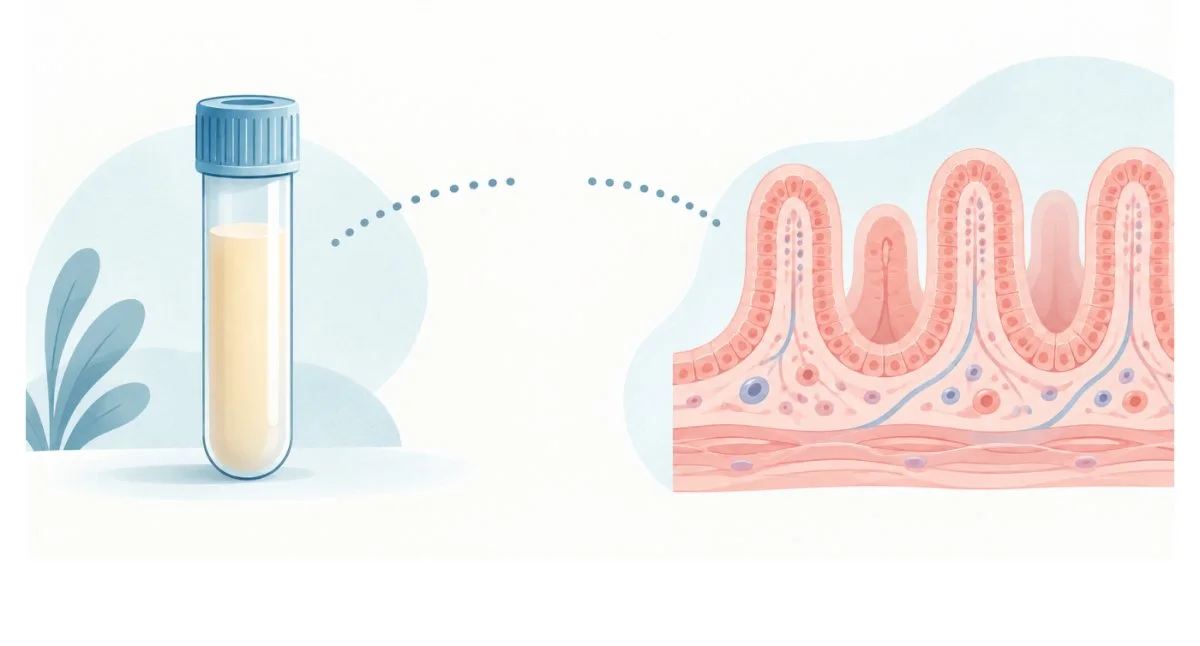
DAO, or diamine oxidase, is an enzyme that helps break down histamine, including in the intestinal lining. Tests may measure its concentration or activity: its ability to break down a test substance. These differ, and results from different methods are not directly interchangeable. A blood result may not reflect DAO activity in the intestine. [1, 2]
Expert sources disagree about the usefulness of testing. Arih and colleagues (2023) linked lower DAO to a higher clinically assessed probability of intolerance, but advise against diagnosis based on DAO alone. An older statement from professional societies, published in 2021, considered serum DAO to have no diagnostic value. [2, 5]
In a small 2024 study, digestive and skin symptoms improved on a low-histamine diet without clear corresponding DAO changes. This illustrates the test's limitations, without settling the debate. [6]
Low DAO may provide one piece of information, but is not proof of histamine intolerance. A normal result cannot rule it out with complete certainty. The result alone is not a reason to follow a strict long-term diet.
What can an allergist do?
Assessment starts with a medical history: your symptoms and health. The doctor will ask what and how much you ate, when symptoms began, how long they lasted and whether they recurred. They will review medicines, supplements and other circumstances. They may:
- Investigate a suspected food allergy using targeted skin prick tests or blood tests for specific IgE antibodies.
- Assess hives, swelling, nasal symptoms or asthma and recommend further investigations.
- Consider tryptase testing after severe reactions affecting the whole body or if a mast cell disorder is suspected.
- Plan a dietary trial and food reintroduction, ideally with a dietitian.
Skin prick tests and specific IgE tests investigate allergy to a particular food, not histamine intolerance. A positive result may indicate sensitisation only: immune sensitivity without symptoms when the food is eaten. Results must be interpreted alongside symptoms. If uncertainty remains, a doctor may recommend a supervised food challenge. [7]
Tryptase is an enzyme associated mainly with mast cells, which can release histamine. It is not a test for histamine intolerance either. Mastocytosis and mast cell activation syndrome (MCAS) are separate diagnoses with their own criteria; neither can be diagnosed from nonspecific symptoms or a single blood test. Not everyone needs every test, and services vary between clinics. [9]
Are other “histamine tests” useful?
Blood or stool histamine measurements and AOC1 genetic testing are not reliable standalone tests for intolerance. Blood histamine fluctuates, bacteria can produce stool histamine, and a genetic variant may indicate a predisposition without explaining current symptoms. Urinary histamine metabolites can provide additional information in settings such as assessment for mast cell activation; that does not make them tests for food intolerance. [1–3, 9]
A histamine challenge also has limits: no universally standardised protocol, uncertain reproducibility and a risk of significant reactions. In a 2023 study, suspected intolerance was not confirmed in most participants, and symptoms after placebo were common. This does not mean people were pretending; it shows why symptoms alone are insufficient. Never attempt a histamine challenge at home. It belongs under medical supervision in an appropriately equipped setting. [3, 4]
Finding the cause without unnecessary restrictions
Investigating other diagnoses does not mean dismissing your symptoms. Depending on the symptoms, possibilities include food allergy, chronic hives, coeliac disease, lactose intolerance, difficulty absorbing fructose, inflammatory bowel disease or irritable bowel syndrome. Palpitations and dizziness can also have other causes. Your doctor will guide the next steps. [2]
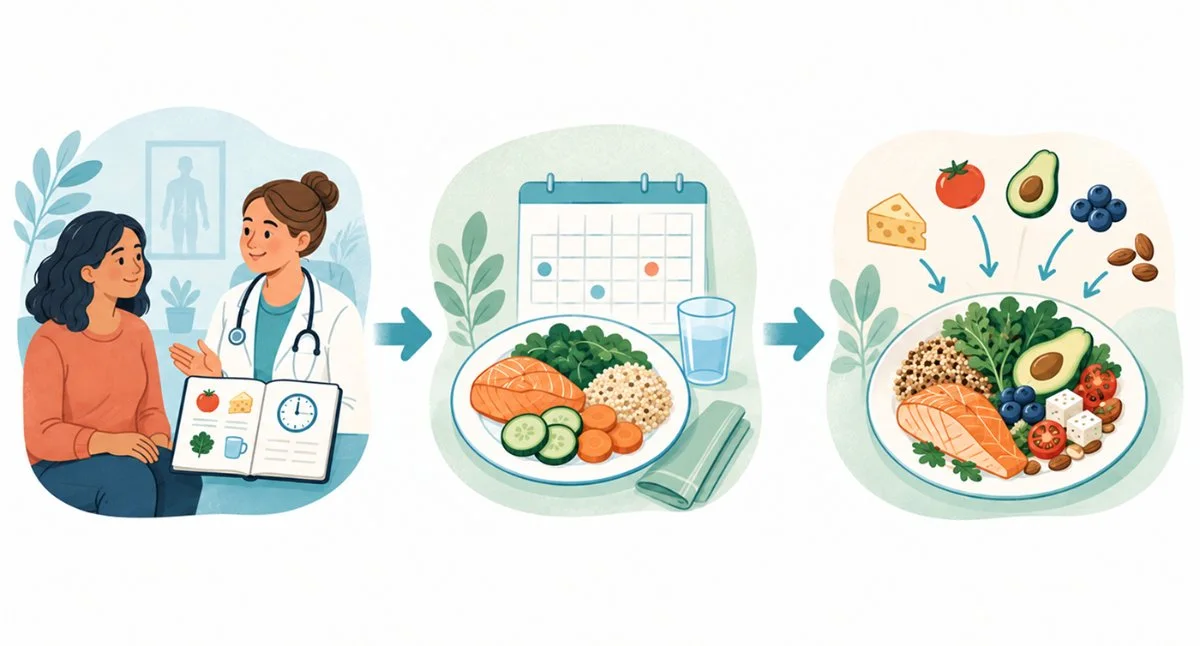
- Record the pattern. Note what and how much you ate, when symptoms began, and whether they recur. Also record occasions when the same food caused no problems.
- Have likely causes assessed. Further tests are most useful when they can change your care.
- If a dietary trial is appropriate, agree on its duration and assessment in advance. It should be short-term and ideally guided by a doctor or dietitian.
- Gradually reintroduce foods. The aim is to find your individual tolerance and retain as varied a diet as possible. [8]
Improvement on a diet is not definitive proof of histamine intolerance. Avoiding alcohol, very fatty meals or other irritating ingredients, and changes in daily habits may also help. Restrictions should not automatically become stricter if there is no clear benefit. A strict long-term diet can reduce energy and nutrient intake and harm your relationship with food. [6, 8]
If you have previously had a severe reaction or a food allergy is suspected, do not try the food again at home without an agreed medical plan. [7]
What to bring to your appointment
- A diary of meal ingredients and amounts, symptom onset and duration, and recurring reactions.
- Photographs of skin reactions and previous test results, including the complete DAO laboratory report.
- A list of medicines and supplements, plus notes about alcohol, infections, exercise, stress or menstruation.
Do not stop prescribed medicines on your own. Antihistamines can suppress skin test reactions. Ask the clinic whether you need to pause them and, if so, for how long. [10]
When to call for help
For difficulty breathing, swelling of the tongue or throat, impaired consciousness, collapse, a marked drop in blood pressure or a rapidly worsening reaction affecting several body systems, call emergency services. In the Czech Republic, call 155 or 112. This may be anaphylaxis or another emergency. If you have a prescribed adrenaline auto-injector, use it according to your emergency action plan. Antihistamines do not replace adrenaline in anaphylaxis. [11]
Key points to remember
There is currently no single completely reliable test. A detailed history, targeted assessment for other causes and a carefully guided dietary trial with food reintroduction offer the most useful approach. Negative allergy tests do not mean your symptoms are imaginary. They mean that the specific mechanism tested for was not demonstrated.
This article does not replace a medical assessment or personalised advice.
Sources and currency
Information checked on 11 September 2026. AWMF listed the 2021 statement as valid until 30 July 2026. No newer published version was found. It is used here as an older expert statement, not automatically as a currently valid guideline. AWMF register.
- Comas-Basté et al. Histamine Intolerance: The Current State of the Art. 2020.
- Reese et al. Guideline on management of suspected adverse reactions to ingested histamine. 2021.
- Jochum. Histamine Intolerance: Symptoms, Diagnosis, and Beyond. 2024.
- Bent et al. Placebo-controlled histamine challenge study. 2023.
- Arih et al. Evaluation of serum DAO as a diagnostic test. 2023.
- Rentzos et al. DAO during a low-histamine or ordinary diet. 2024.
- Santos et al. EAACI guidelines on the diagnosis of IgE-mediated food allergy. 2023.
- Reese. Suspected histamine intolerance—how to proceed? 2025.
- Voelker and Pongdee. Biomarkers in the diagnosis of mast cell activation. 2025.
- ACAAI. Testing and Diagnosis.
- SÚKL. Anaphylaxis and its treatment (in Czech). 2021.