

Histamine Intolerance, IBS or an Intestinal-Lining Problem? Why Gut Symptoms Overlap
Symptoms you attribute to histamine intolerance can resemble those of irritable bowel syndrome (IBS) or a condition affecting the gut lining. When symptoms happen, changes in bowel habits and other signs help guide what to investigate.
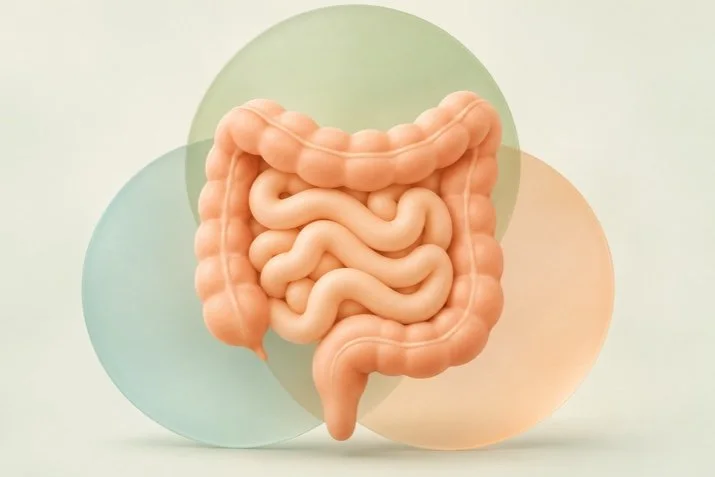
Stomach pain after bread does not necessarily mean gluten is the problem. Gluten is a group of proteins found in wheat, for example. Wheat also contains fructans, a type of carbohydrate that can worsen symptoms in some people with irritable bowel syndrome. Feeling unwell after bread does not tell you whether coeliac disease, IBS or something else is responsible. [1] [4] [8]
Why different gut problems can feel similar
The gut can respond to different problems with pain, cramps, bloating, diarrhoea or constipation. Sometimes its movement and sensitivity change. In other conditions, the lining is damaged, or symptoms are linked to a component of food. The symptoms can look much the same even though the cause and treatment differ. [1] [4] [5]
You may face a similar question after yoghurt. It contains lactose, the milk sugar that some people have difficulty digesting. Fermented foods can also vary in their content of biogenic amines, a group of substances that includes histamine. Symptoms after yoghurt do not identify which component was involved. The amount may matter too: a small taste and a full portion may affect you differently. [5] [8]
What happens in irritable bowel syndrome
Irritable bowel syndrome, or IBS, typically involves recurring abdominal pain related to bowel movements and a change in how often you pass stools or what they look like. Some people mainly have diarrhoea, others constipation, and some alternate between the two. Bloating, a feeling that the bowel has not emptied completely and symptoms after meals are also common. [1] [2]
Your gut and brain communicate with each other. Their signals help control bowel movements and how strongly you feel sensations in your abdomen. In IBS, these processes can work differently: the gut may be more sensitive to stretching, and its movements may change. Someone can therefore have substantial symptoms even when investigations do not show damage to the lining. The pain is real. The term “disorder of gut–brain interaction” does not mean that someone is imagining it. [1]
To recognise IBS, a clinician looks at the course of symptoms, checks for warning signs and arranges appropriate investigations when needed. This is called a positive diagnostic approach: looking for a typical IBS pattern that fits the assessment and test results. A person with this typical pattern and no warning signs does not need every available test. [1] [2]
When the intestinal lining is affected
The lining is the inner layer of the intestine. Some diseases damage it or cause inflammation. Other symptoms may then accompany pain and changes in bowel habits, helping a clinician work out what to investigate.
Coeliac disease
In coeliac disease, gluten triggers an immune reaction that damages the lining of the small intestine. Alongside diarrhoea, bloating and pain, there may be tiredness, anaemia or a shortage of certain nutrients. This is one reason blood testing for coeliac disease is recommended for adults with symptoms resembling IBS. [4]
If you are waiting for coeliac investigations, do not start a gluten-free diet without discussing it with your clinician. Antibody levels and changes in the intestine can fade after gluten is removed, making results harder to interpret. If you already avoid gluten, ask your clinician how to proceed with testing. [4]
Crohn’s disease and ulcerative colitis
These chronic inflammatory conditions are grouped under the name inflammatory bowel disease, or IBD. They may cause persistent diarrhoea, pain, blood in the stool, fever, anaemia or weight loss. Symptoms and the course of the condition vary between people. [1]
Depending on the situation, a clinician may arrange a stool calprotectin test for diarrhoea. Calprotectin is a marker of inflammation that helps guide whether inflammatory bowel disease needs further investigation. The test cannot diagnose a condition on its own, and a normal result does not rule out every possible cause of symptoms. A clinician therefore considers it alongside symptoms, medicines, age and other findings. [3] [1]
What to note when histamine is suspected
If you associate symptoms with histamine, useful details include whether they recur after a particular food, how much you ate, how fresh it was and how soon symptoms began. Mention symptoms outside digestion too, such as flushing, headache, nasal symptoms or itching. Even this combination does not confirm histamine intolerance. During a discussion of your symptoms, the clinician also considers other possible causes. [5]
The next steps may include a time-limited dietary adjustment followed by bringing foods back. Improvement after a diet change does not, by itself, prove that histamine was responsible. [5]
A blood DAO result—a measure of an enzyme involved in breaking down histamine—or a stool histamine measurement cannot confirm the diagnosis on its own. A commercial analysis of the gut microbiome, the community of microorganisms in the intestine, cannot by itself establish that histamine is causing your symptoms either. That is a different question from a targeted stool test for signs of inflammation, for example. We discuss testing in more detail in Is there a reliable test for histamine intolerance?. [5] [9]
What to prepare for an appointment
A GP or gastroenterologist, a doctor specialising in the digestive system, will find a concrete account of your symptoms useful. You can bring:
- A short food and symptom record. For example, covering the previous one or two weeks. Note meals, approximate portions, symptom times, pain, stool appearance and frequency, and any skin or breathing symptoms. You do not need to cut out more foods while keeping records.
- A list of medicines and supplements. Some can affect bowel habits, pain or test results.
- Answers to a few questions. Does pain ease after a bowel movement? Does diarrhoea wake you at night? Have you noticed blood, fever or weight loss? Is there a family history of coeliac disease, IBD or bowel cancer?
- Previous results. Bring complete reports so the clinician can consider the findings together.
Depending on how symptoms have developed, investigations may include a blood count, blood markers of inflammation, coeliac testing and selected stool tests for diarrhoea. Colonoscopy, which examines the inside of the large bowel, is not automatically the first step for everyone with typical IBS symptoms. [1] [2] [3]
Make dietary changes one at a time
Some people with IBS may benefit from changes to meals and portions or a temporary low-FODMAP diet. FODMAP is the collective name for several groups of carbohydrates, including fructans in wheat and lactose in milk. These substances can contribute to symptoms in some people. [1] [8]
In the 2024 CARIBS study, some adults with IBS reported improvement in the groups following different dietary approaches and in the group receiving medicines selected for their symptoms. A 2022 review of studies also found benefits from some diets, although results differed between studies. Choosing an approach therefore depends on the person’s symptoms and circumstances. [6] [7] [1]
Combining strict low-histamine, low-FODMAP, gluten-free and lactose-free diets can remove many foods from your meals. With a doctor or dietitian, agree what a proposed change is meant to explore, how you will assess its benefit and when you will broaden your diet again. The aim is to eat enough and keep as much variety as possible in a diet that works in everyday life. [5] [8] Read more in A low-histamine diet is not a diet for life.
When to seek help
Blood in the stool, unexplained weight loss, anaemia, fever or persistent or night-time diarrhoea deserve prompt medical assessment. Also mention any family history of coeliac disease, IBD or bowel cancer. [1]
Seek urgent medical help for severe, persistent or worsening pain, major bleeding, black tarry stools, fainting, an inability to keep fluids down or rapid deterioration. Do not wait to finish your records or a dietary change in this situation. [10] [11]
Important: This article is for orientation and does not replace individual diagnosis or treatment.
Sources
- Vasant D. H. et al. British Society of Gastroenterology guidelines on the management of irritable bowel syndrome. Gut. 2021.
- NICE. Irritable bowel syndrome in adults: diagnosis and management. CG61.
- Smalley W. et al. AGA Clinical Practice Guidelines on the Laboratory Evaluation of Functional Diarrhea and IBS-D. Gastroenterology. 2019.
- NICE. Coeliac disease: recognition, assessment and management. NG20.
- Reese I. et al. Guideline on management of suspected adverse reactions to ingested histamine. Allergologie Select. 2021.
- Nybacka S. et al. Diet versus optimised medical treatment in irritable bowel syndrome (CARIBS). Lancet Gastroenterology & Hepatology. 2024.
- Yu S. J. et al. Efficacy of a Restrictive Diet in Irritable Bowel Syndrome: systematic review and network meta-analysis. Korean Journal of Gastroenterology. 2022.
- World Gastroenterology Organisation. Diet and the Gut. WGO Global Guidelines. 2018.
- Porcari S. et al. International consensus statement on microbiome testing in clinical practice. Lancet Gastroenterology & Hepatology. 2025;10:154–167.
- University Hospitals Plymouth NHS Trust. Non-Specific Abdominal Pain. 2026.
- NHS. Bleeding from the bottom (rectal bleeding).